



Venturi Tube and Pressure Difference
A Venturi tube attached to a blower produces airflow through a channel with varying cross-sections. As the air passes through the narrow section, the pressure drops, which can be observed with water-filled manometers attached to the tube. This demonstrates the Venturi effect, part of Bernoulli's principle.
Request a Quote
Related Products
Vertical Stabilizer Experiment
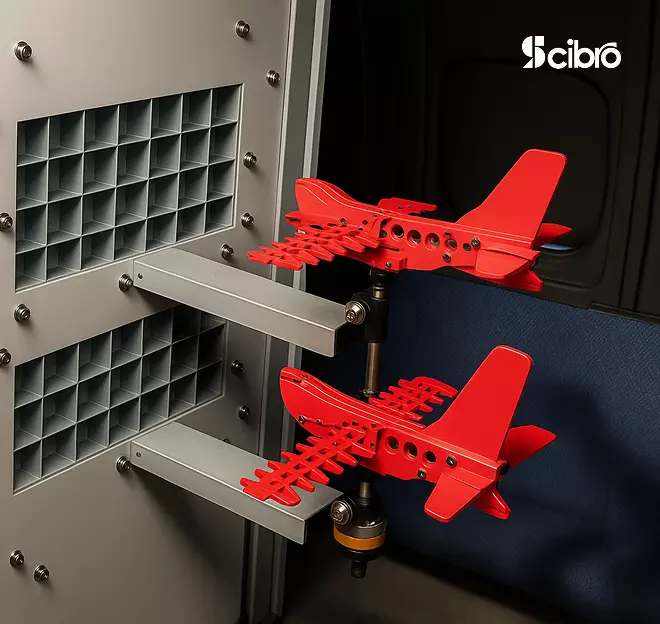
Similar to the horizontal stabilizer experiment, this setup involves two model airplanes mounted in front of fans. In this case, the airplanes are free to rotate around a vertical axis. One airplane is equipped with a vertical stabilizer, while the other is not. Users can see how the presence or absence of a vertical stabilizer affects the airplane’s yaw stability.
Horizontal Stabilizer Experiment
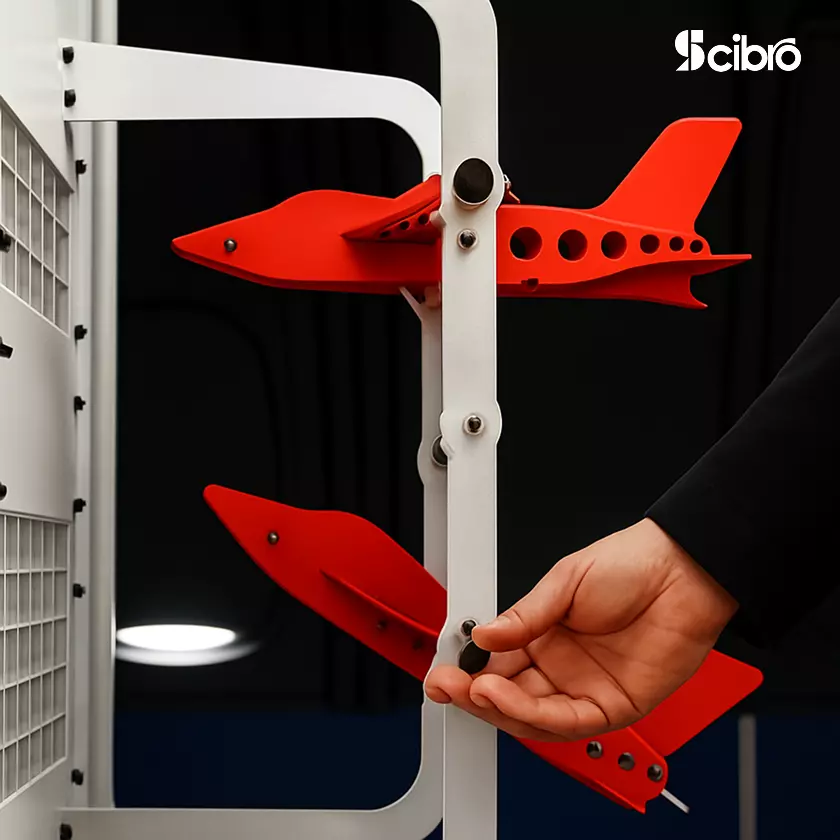
This device includes two small model airplanes mounted in front of two fans that blow air at them. The airplanes are free to rotate around a horizontal axis. Users can alter the position of the stabilizers and observe how it affects the stability of the airplane in flight. One airplane is equipped with a horizontal stabilizer, while the other is not, allowing for a direct comparison.
Bernoulli's Electrical Wind Experiment
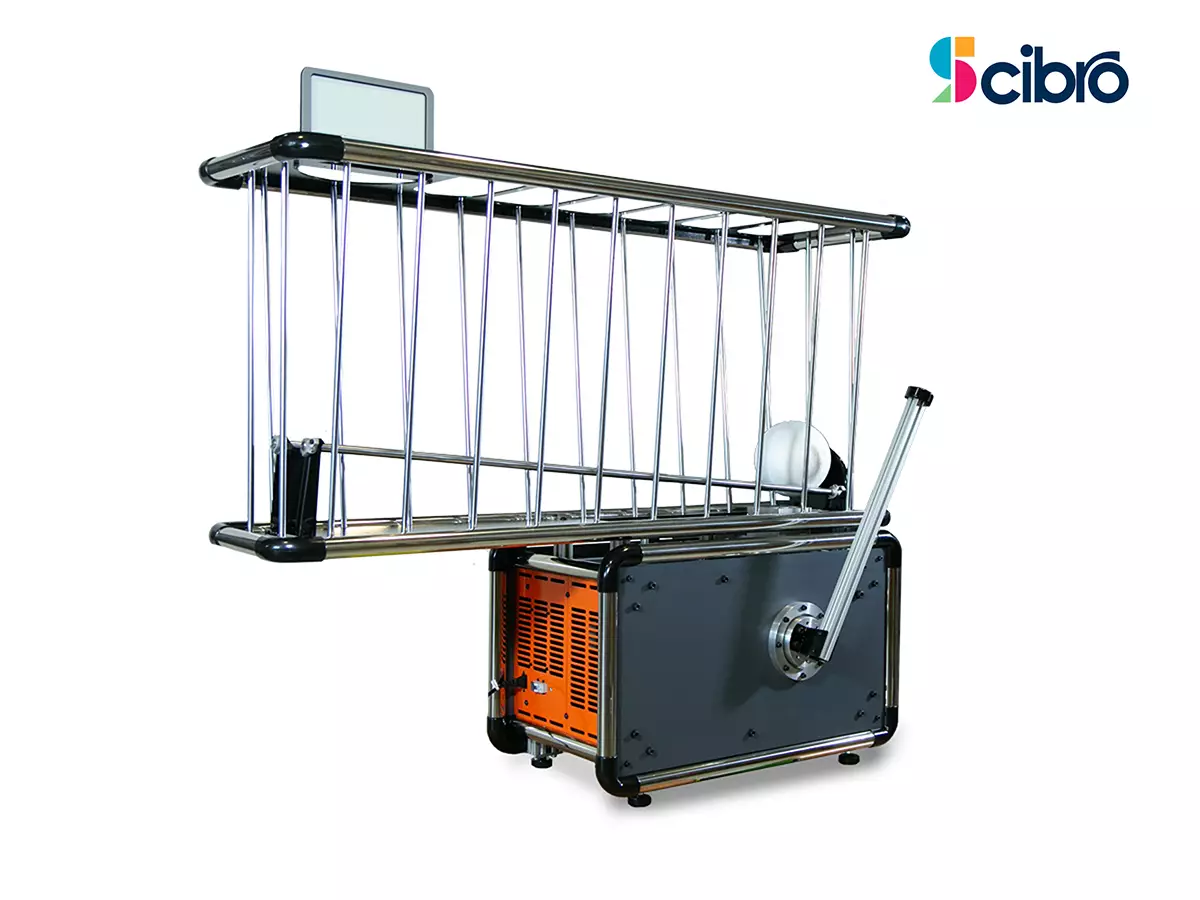
A wind generator that, when activated, produces airflow. Users can adjust the angle of the airflow nozzle, which lifts a lightweight ball into the air. By changing the nozzle’s angle, the ball remains suspended in the low-pressure zone created by the airflow, illustrating Bernoulli’s principle.
Jet Engine Thrust Reverser Model
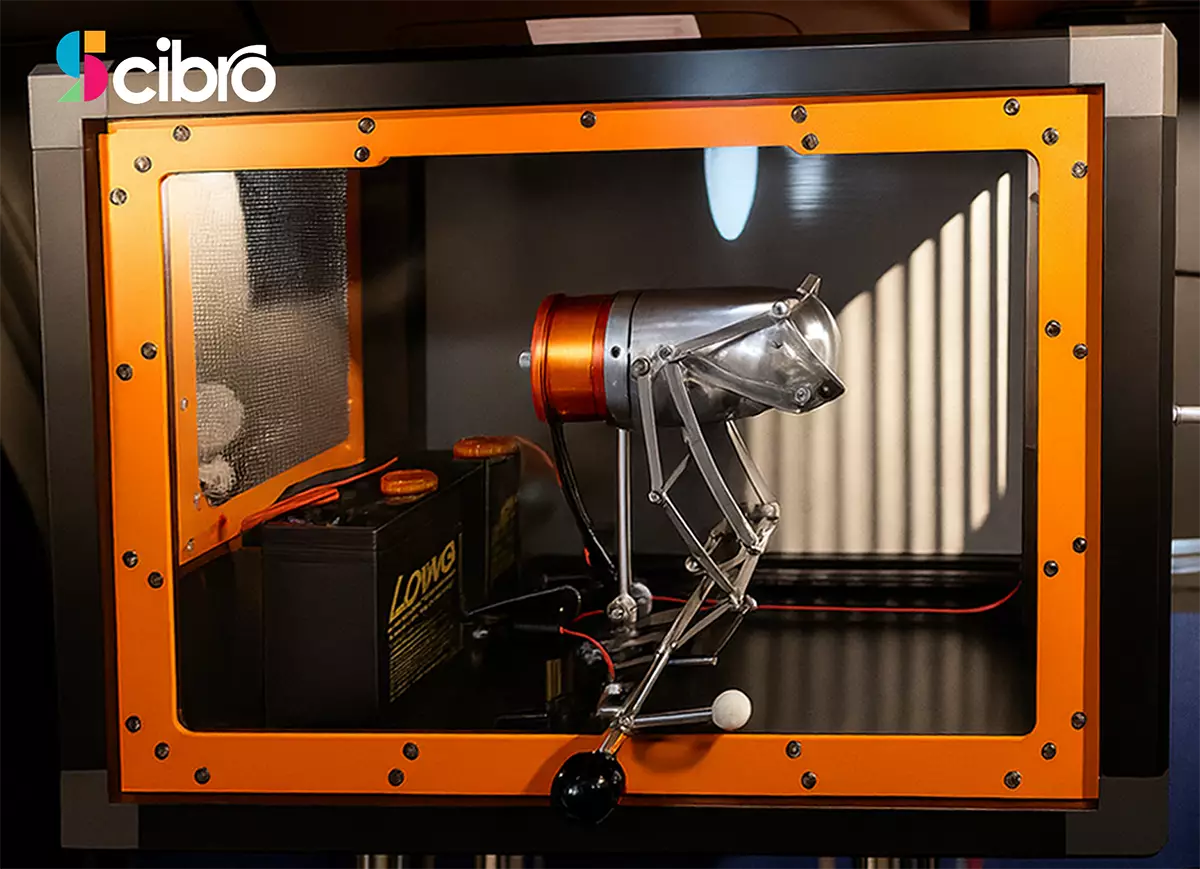
The device has an electric jet fan used in a model of an aircraft jet engine, which is mounted on a sliding slide and can freely move forward or backward slightly. When the user turns on the engine with his right hand, a strong wind is generated and the user feels the wind with his right hand. The user's left-hand holds the handle attached to the sliding slide and feels the forward force produced by the engine.
At the end of the engine, like many passenger jet engines, a thrust reversing mechanism is installed. When the handle is turned by the user's left hand, the reversing valve opens, and, as a result, the direction of movement of the engine exhaust gases is reversed and the engine acts as a brake, causing negative acceleration.
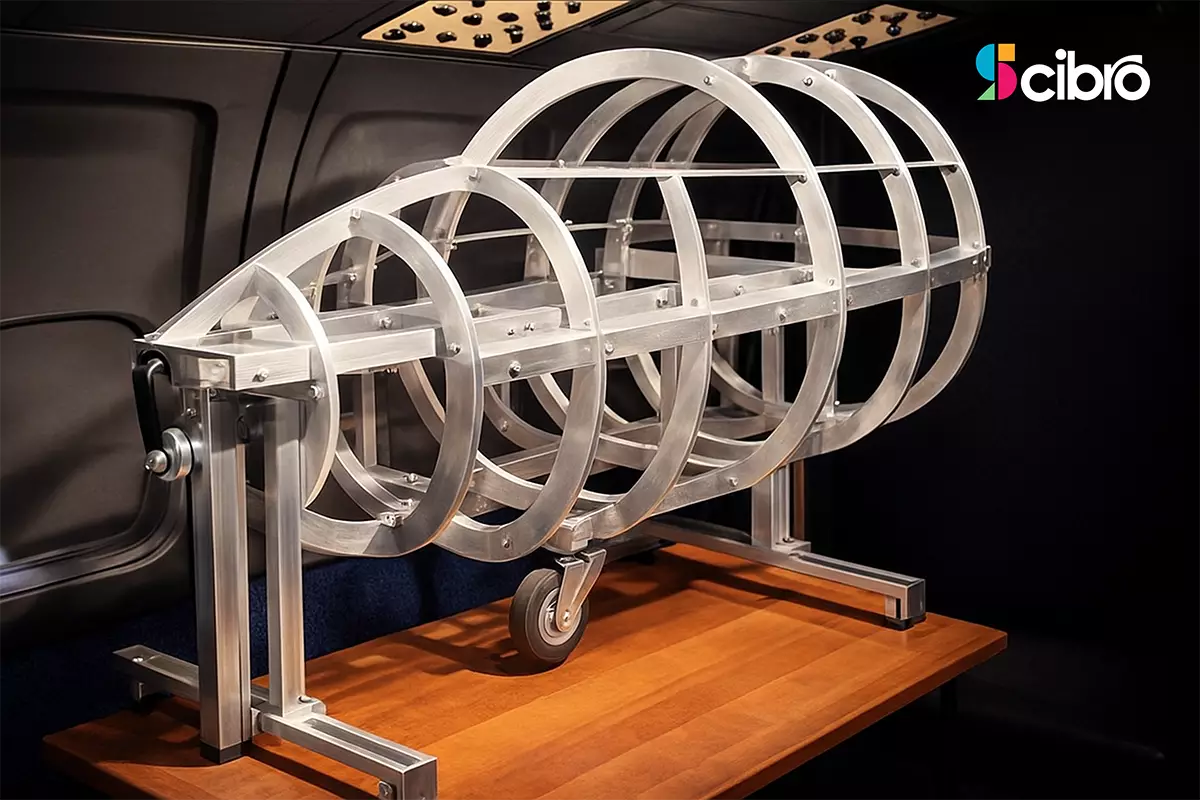
Airplane Landing Gear
A mechanical model showing how airplane landing gear is retracted and extended. Users can operate the mechanism to see how the wheels are stored during flight and deployed during landing.
write down your comment
Email
Message
Submit
Venturi Tube and Pressure Difference
A Venturi tube attached to a blower produces airflow through a channel with varying cross-sections. As the air passes through the narrow section, the pressure drops, which can be observed with water-filled manometers attached to the tube. This demonstrates the Venturi effect, part of Bernoulli's principle.
Request a Quote
Related Products
Vertical Stabilizer Experiment
Similar to the horizontal stabilizer experiment, this setup involves two model airplanes mounted in front of fans. In this case, the airplanes are free to rotate around a vertical axis. One airplane is equipped with a vertical stabilizer, while the other is not. Users can see how the presence or absence of a vertical stabilizer affects the airplane’s yaw stability.
Horizontal Stabilizer Experiment
This device includes two small model airplanes mounted in front of two fans that blow air at them. The airplanes are free to rotate around a horizontal axis. Users can alter the position of the stabilizers and observe how it affects the stability of the airplane in flight. One airplane is equipped with a horizontal stabilizer, while the other is not, allowing for a direct comparison.
Bernoulli's Electrical Wind Experiment
A wind generator that, when activated, produces airflow. Users can adjust the angle of the airflow nozzle, which lifts a lightweight ball into the air. By changing the nozzle’s angle, the ball remains suspended in the low-pressure zone created by the airflow, illustrating Bernoulli’s principle.
Jet Engine Thrust Reverser Model
The device has an electric jet fan used in a model of an aircraft jet engine, which is mounted on a sliding slide and can freely move forward or backward slightly. When the user turns on the engine with his right hand, a strong wind is generated and the user feels the wind with his right hand. The user's left-hand holds the handle attached to the sliding slide and feels the forward force produced by the engine.
At the end of the engine, like many passenger jet engines, a thrust reversing mechanism is installed. When the handle is turned by the user's left hand, the reversing valve opens, and, as a result, the direction of movement of the engine exhaust gases is reversed and the engine acts as a brake, causing negative acceleration.
Airplane Landing Gear
A mechanical model showing how airplane landing gear is retracted and extended. Users can operate the mechanism to see how the wheels are stored during flight and deployed during landing.
write down your comment
Email
Message
Submit
Venturi Tube and Pressure Difference

- $
Request a Quote
A Venturi tube attached to a blower produces airflow through a channel with varying cross-sections. As the air passes through the narrow section, the pressure drops, which can be observed with water-filled manometers attached to the tube. This demonstrates the Venturi effect, part of Bernoulli's principle.
Related Products
Vertical Stabilizer Experiment
Similar to the horizontal stabilizer experiment, this setup involves two model airplanes mounted in front of fans. In this case, the airplanes are free to rotate around a vertical axis. One airplane is equipped with a vertical stabilizer, while the other is not. Users can see how the presence or absence of a vertical stabilizer affects the airplane’s yaw stability.
Horizontal Stabilizer Experiment
This device includes two small model airplanes mounted in front of two fans that blow air at them. The airplanes are free to rotate around a horizontal axis. Users can alter the position of the stabilizers and observe how it affects the stability of the airplane in flight. One airplane is equipped with a horizontal stabilizer, while the other is not, allowing for a direct comparison.
Bernoulli's Electrical Wind Experiment
A wind generator that, when activated, produces airflow. Users can adjust the angle of the airflow nozzle, which lifts a lightweight ball into the air. By changing the nozzle’s angle, the ball remains suspended in the low-pressure zone created by the airflow, illustrating Bernoulli’s principle.
Jet Engine Thrust Reverser Model
The device has an electric jet fan used in a model of an aircraft jet engine, which is mounted on a sliding slide and can freely move forward or backward slightly. When the user turns on the engine with his right hand, a strong wind is generated and the user feels the wind with his right hand. The user's left-hand holds the handle attached to the sliding slide and feels the forward force produced by the engine.
At the end of the engine, like many passenger jet engines, a thrust reversing mechanism is installed. When the handle is turned by the user's left hand, the reversing valve opens, and, as a result, the direction of movement of the engine exhaust gases is reversed and the engine acts as a brake, causing negative acceleration.
Airplane Landing Gear
A mechanical model showing how airplane landing gear is retracted and extended. Users can operate the mechanism to see how the wheels are stored during flight and deployed during landing.
write down your comment
Email
Message
Submit