
Not every museum is designed with children's learning as a primary goal — and that distinction matters when you're choosing where to take your family. An educational museum actively designs its content, exhibits, and programs to support learning, not just display objects. This guide helps parents choose the right type for their child's age and interests, and make the most of every visit.
Think about the last time your child walked out of a museum genuinely buzzing — full of questions, wanting to recreate something they had seen, asking to come back. That reaction does not happen by accident. It happens when a museum has been designed with children's learning as its primary goal, not as an afterthought. The difference between a collection museum and a true educational museum is intentionality — and knowing how to spot it will transform how your family chooses where to go, and what to do when you get there.
The Four Main Types of Educational Museums
Science & Discovery Museums
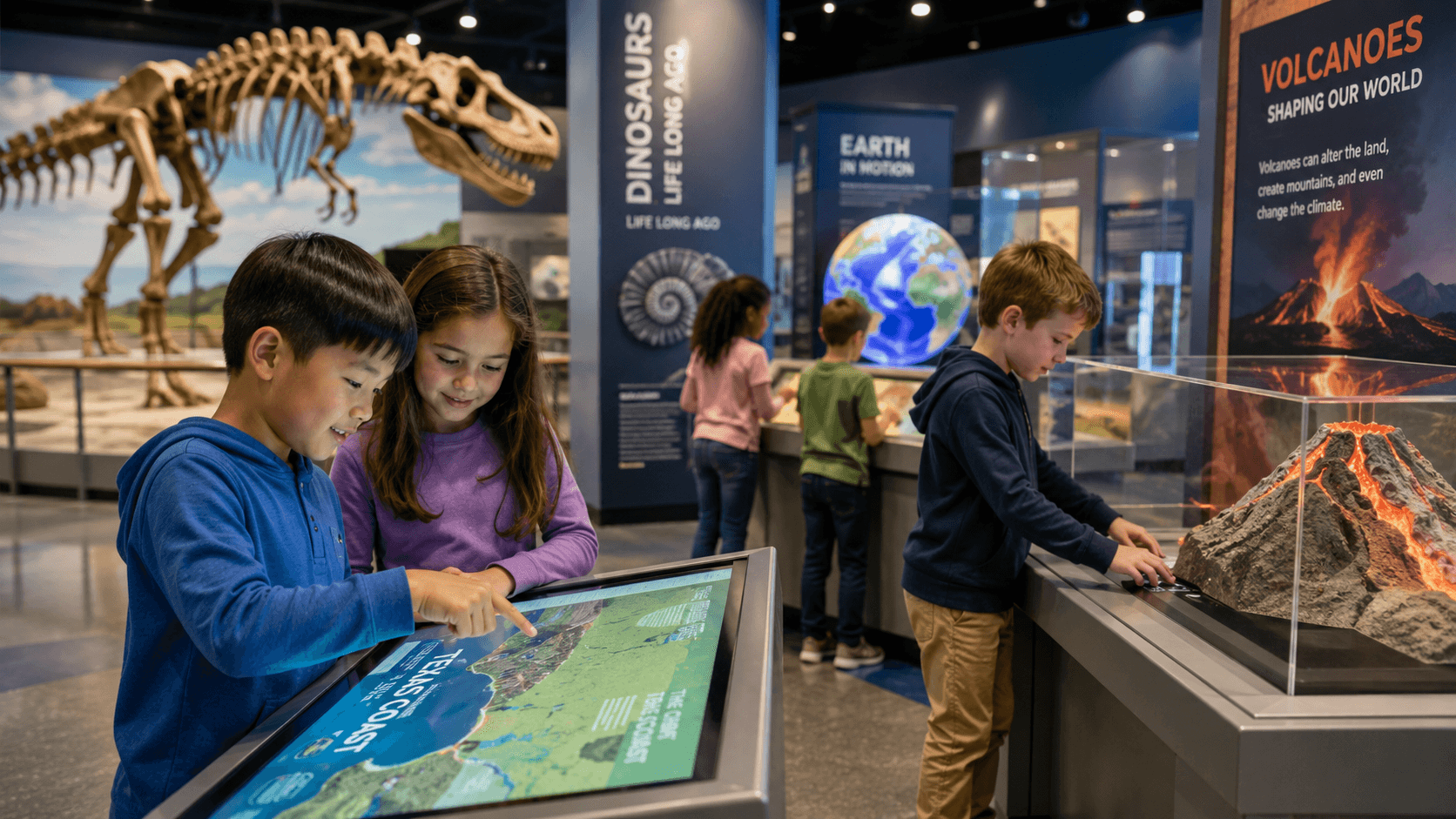
Hands-on by design. Children form hypotheses, operate exhibits, and draw conclusions through direct experience. Best for ages 4–16 — the most broadly applicable museum type for STEM learning and long-term science engagement.
Natural History Museums
Real fossils, mounted specimens, and habitat dioramas that cannot be replicated digitally. Children sense the difference between a real fossil and a replica. Best for ages 7+ with interests in biology, geology, and evolutionary history.
Children's Museums
Purpose-built for early learners ages 0–8, with exhibits scaled to small bodies and concepts matched to early development. Role play, sensory exploration, and early STEM concepts together. Best as a first museum experience for families with very young children.
History & Culture Museums
Develops critical thinking, cultural literacy, and historical empathy that STEM learning alone cannot provide. Best for ages 8+ who are developing the historical context to engage meaningfully with collections and primary sources.
Choosing by Your Child's Age
Ages 2–5: Children's museums and early-years science wings. Learning happens through repetition and physical play — the best exhibit is the one a three-year-old wants to repeat fifteen times.
Ages 5–8: Science discovery museums come into their own. Children can form hypotheses and operate interactive exhibits meaningfully. Natural history museums also engage strongly at this age.
Ages 8–12: The full range becomes accessible. This is the age when museum visits have the most measurable impact on school performance in related subjects.
Ages 12–16: Museums offering real intellectual challenge — unresolved questions, expert programming, teen volunteer placements — produce the deepest learning for secondary-age visitors.
Three Questions That Sharpen Every Museum Choice
- What is my child currently curious about? Build on existing curiosity rather than introducing entirely new interests.
- What is their class covering right now? A museum visit that connects to current curriculum reinforces abstract classroom concepts with direct experience.
- How does this child learn best? Kinesthetic learners thrive in hands-on science environments. Reflective learners often engage more deeply with natural history or art museum collections.
Making the Visit Count: Before, During & After
Before: Find one exhibit your child is genuinely curious about. Arrive with a real question.
During: Follow their interest, not the floor plan. Ask "What do you think will happen?" rather than explaining. A focused 90-minute visit produces more learning than an exhausted four-hour one.
After: Act on peak curiosity in the 24 hours following the visit. Recreate something you saw. Look up what you couldn't answer. Build or experiment with something connected to what you experienced.
Extending the Learning at Home
The most lasting impact of educational museum visits comes when they're part of a regular pattern of science learning — not isolated events. Scibro's monthly STEM science kits are designed to fit exactly this pattern. Available for ages 4–16, each kit connects to topics children encounter in educational museums — from physics and chemistry to biology and engineering — bringing hands-on discovery home, every month, at your own pace.
Frequently Asked Questions
Are educational museums good for homeschooled children?
Yes — they are among the most valuable resources for homeschooling families. Many offer dedicated homeschool programs, flexible group visits, and discounted memberships. Contact museums directly; many offer access to collections and staff rarely available to general visitors.
How often should families visit to make a real difference?
Even two to three visits per year produce measurable positive effects on children's engagement with science and history subjects. Quality of engagement matters more than frequency — a focused, prepared visit is worth more than several rushed ones. Scibro's monthly kits sustain the curiosity museum visits spark between each trip.