

Baking Soda Volcano Experiment
Pour vinegar into baking soda and trigger a real chemical eruption — right in your kitchen sink.
⚠️ Safety Notice
Wear eye protection and do this experiment on a tray or outdoors. Do not taste any materials. Vinegar is acidic and may sting if it contacts the eyes; rinse immediately with water if this occurs. Adult supervision recommended for children under 3.
Materials Needed
- Small plastic bottle or cup (250–500 ml)
- 1 tablespoon of baking soda
- 1/4 cup (60 ml) of white vinegar
- 1 teaspoon of dish soap
- Red or orange food coloring (optional — for a lava effect)
- A tray or baking sheet (to catch overflow)
Quick Info
Step-by-Step Instructions
Prepare Your Workspace
Place your bottle or cup in the center of a tray. Position it in the kitchen sink if working indoors — the tray catches any overflow and makes cleanup take seconds. Clear the area around the bottle so nothing important is nearby before you begin.
Add the Baking Soda
Carefully spoon 1 tablespoon of baking soda into the bottle. If the opening is narrow, use a small funnel. For colored foam, add 5–8 drops of red or orange food coloring directly on top of the baking soda now, before adding anything else.
Add the Dish Soap
Squeeze about 1 teaspoon of dish soap into the bottle on top of the baking soda. The soap traps carbon dioxide gas inside bubbles, making the foam thicker, larger, and longer-lasting than it would be without it.
Pour in the Vinegar
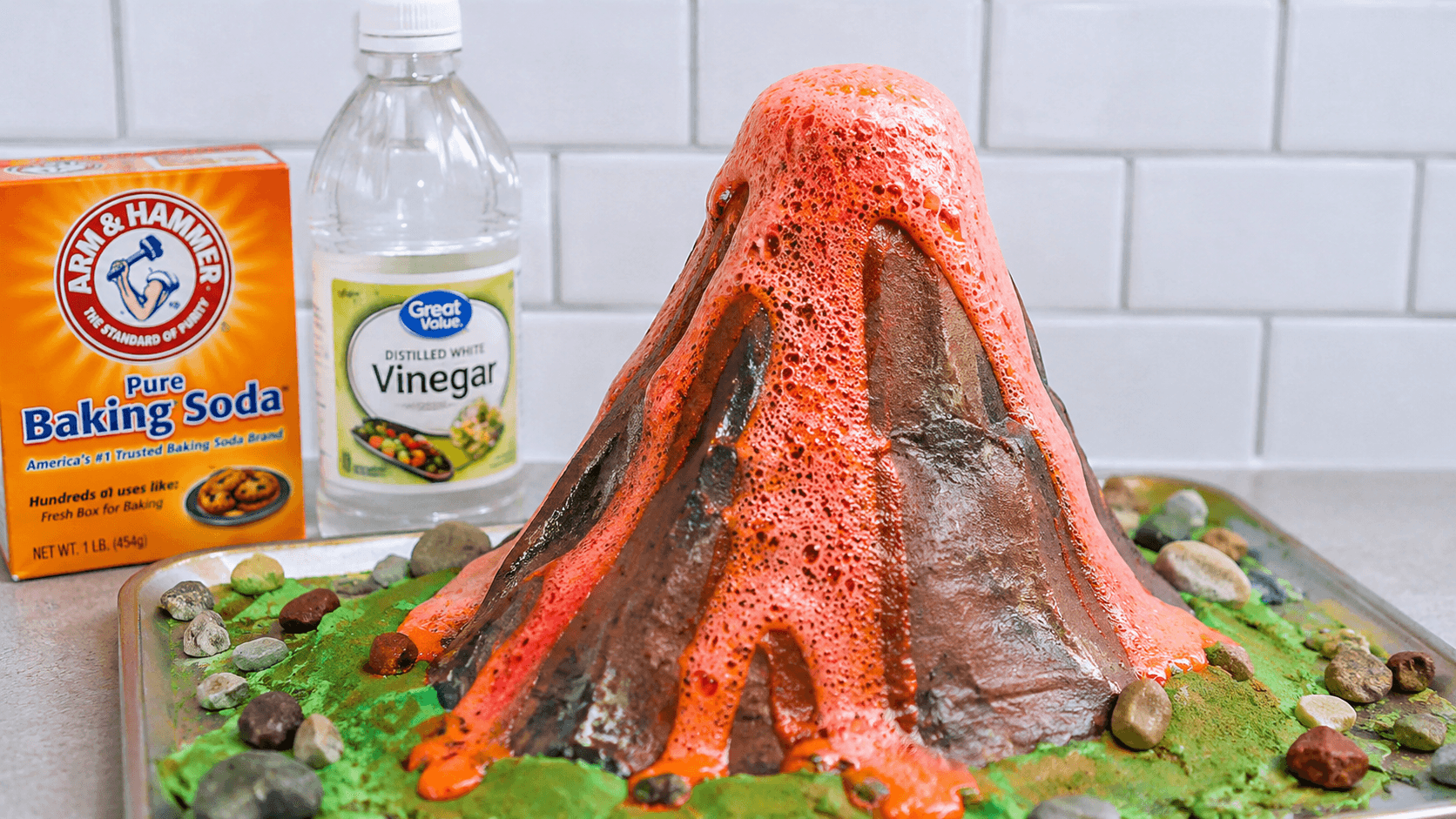
Slowly pour the vinegar into the bottle. The reaction begins the instant the vinegar meets the baking soda. Stand back slightly as the foam rises inside the bottle, pushes upward, overflows the rim, and runs down the sides onto the tray.
Observe and Clean Up
Watch the reaction for a minute or two until it stops fizzing. The leftover liquid is mostly water and sodium acetate — a harmless salt. This mixture is a mild natural cleaner; pour it down the sink or use it to clean the drain.
The Science Behind It
🤓 Fun Fact
Real volcanic eruptions are driven by the same basic principle — gases dissolved in magma deep underground suddenly escape to the surface as pressure drops. Your kitchen volcano is a near-perfect model of that process, just without the 1,000°C temperatures.