

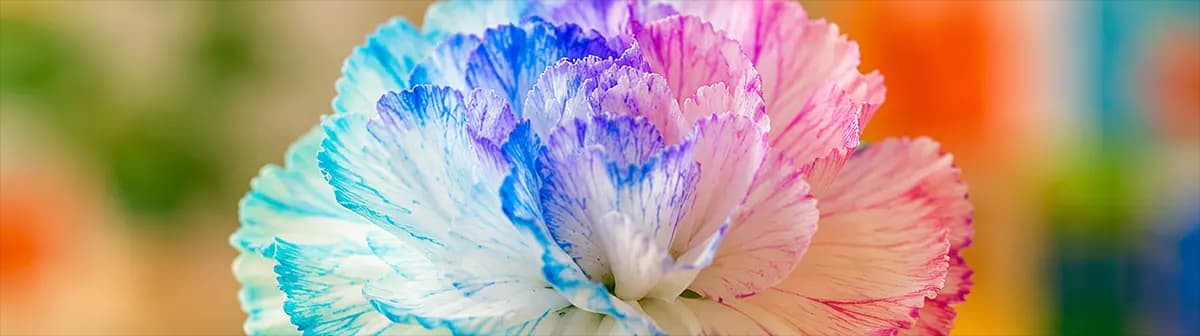
DIY Color Changing Flowers
Watch white flowers magically change color and discover how plants transport water through their stems using capillary action.
⚠️ Safety Notice
This experiment is safe for all ages. Food coloring may stain clothes and surfaces — work on a protected surface or use a tray. Supervise young children around glassware and scissors used to trim the stem. Do not allow children to drink the colored water.
Materials Needed
- White carnations (2–3 flowers)
- Clear glass or jar
- Water
- Food coloring (bright colors work best: blue, red, or purple)
- Scissors or a sharp knife (adult use)
- Tray or newspaper (to protect the surface)
Quick Info
Step-by-Step Instructions
Prepare Your Workspace
Lay a tray or newspaper on your work surface to protect it from food coloring spills. Gather your glass, water, food coloring, and carnations. Have scissors ready for an adult to trim the stems
Mix the Colored Water
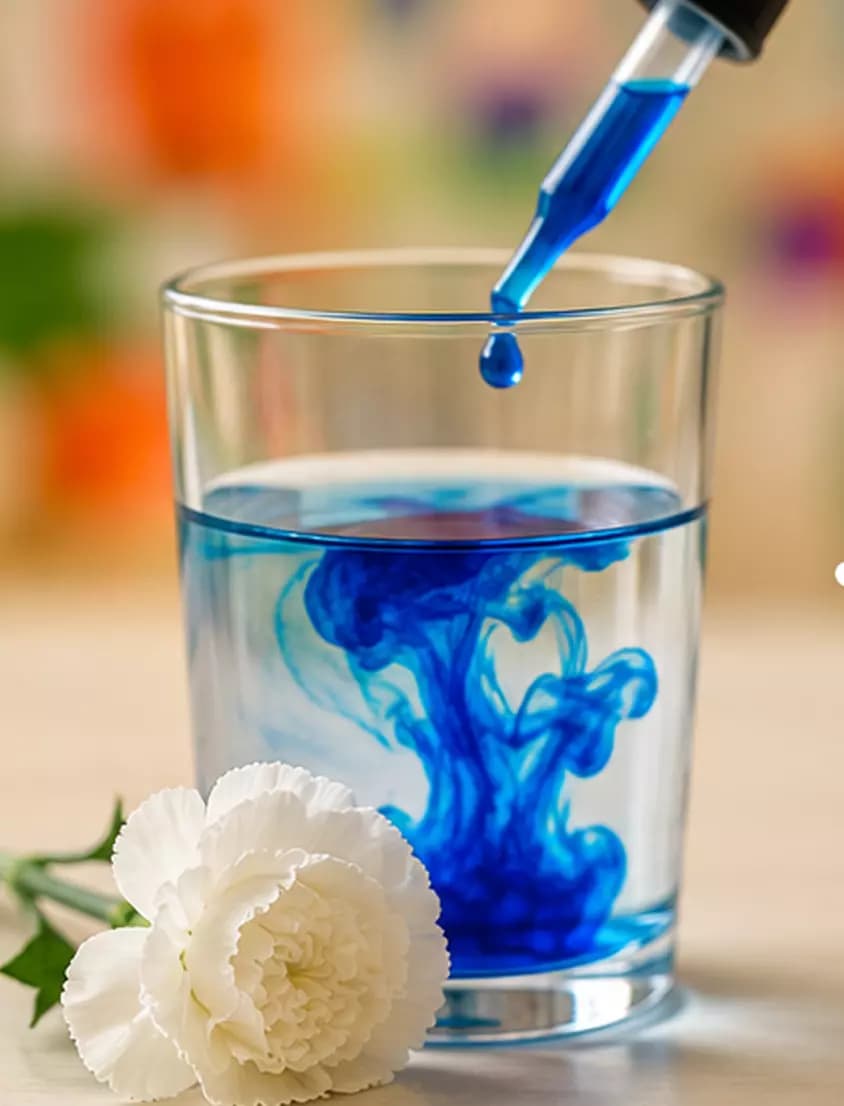
Fill your glass about halfway with water. Add 20–30 drops of food coloring and stir well. The more coloring you add, the more vivid the result. Bright blues, reds, and purples show the most dramatic color change
Trim the Stem
Using scissors or a sharp knife (adult supervision recommended), cut the stem at a 45-degree angle. A diagonal cut increases the surface area in contact with the water, allowing the flower to absorb more liquid faster. Trim about 2–3 cm off the bottom.
Place the Flower in the Water
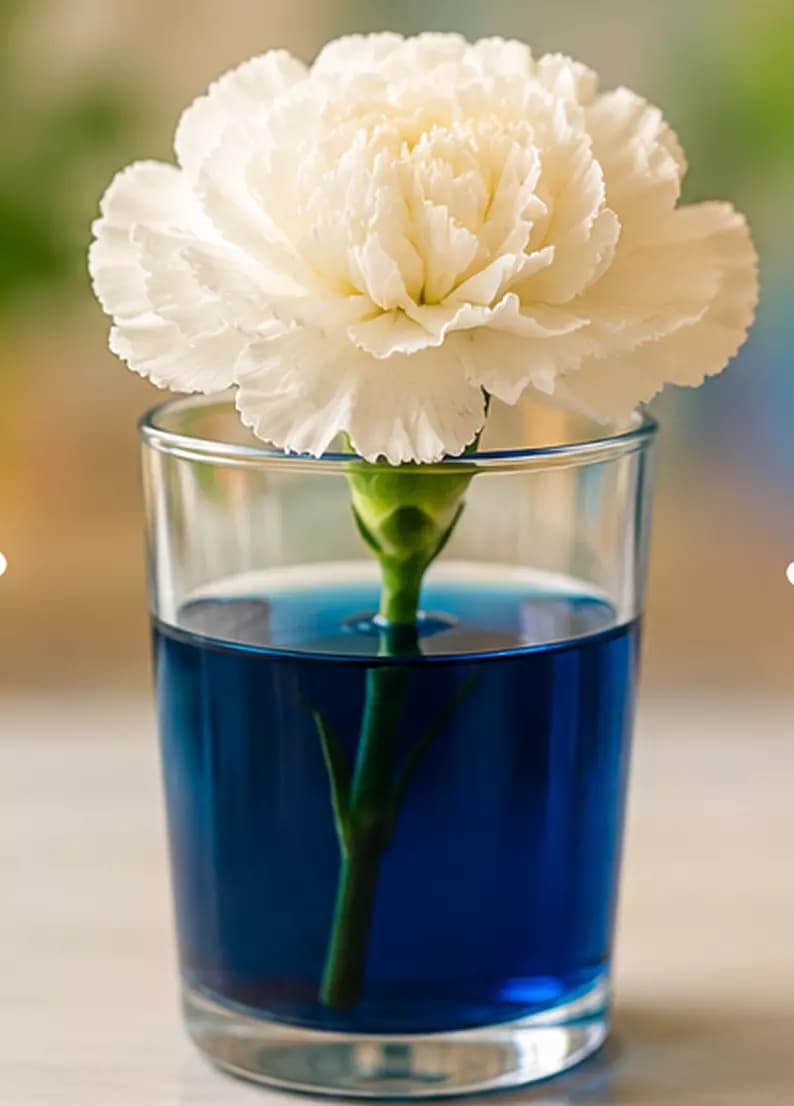
Immediately place the freshly cut stem into the colored water. Position the glass somewhere bright and at room temperature. Do not place it in direct sunlight as this can wilt the flower before the color change completes.
Observe and Record
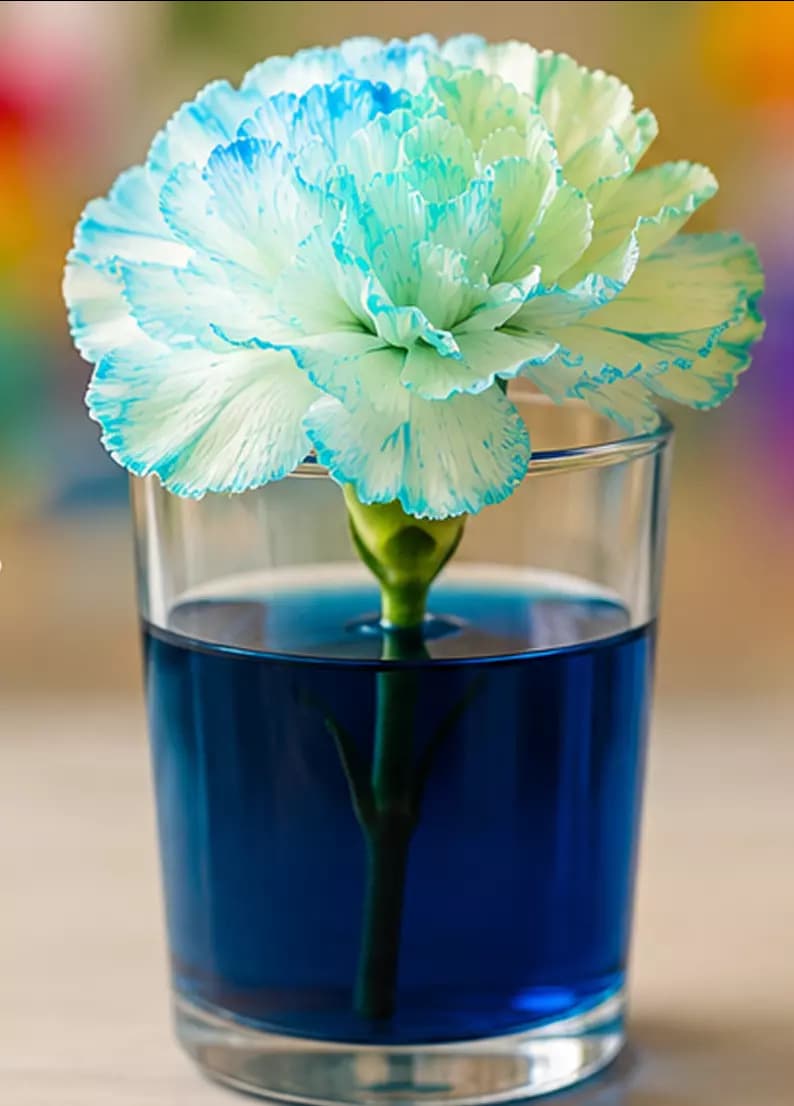
Check the flower every hour. You should begin to see color appearing at the petal tips within 2–4 hours. Full color saturation typically takes 8–24 hours. Try different colors in different glasses and compare the results!
The Science Behind It
🤓 Fun Fact
If you split the stem of a carnation lengthwise and place each half in a different color of water, you can create a two-tone flower — half one color, half another! This shows that each xylem pathway leads to a specific part of the petal.