DIY Science Kits – Science Kits for Kids | Scibro

DIY Science Kits for Curious Kids
Build, experiment, and discover the wonders of science with hands-on DIY projects designed for young explorers.
Subscribe Now
DIY Science Kits
4 kits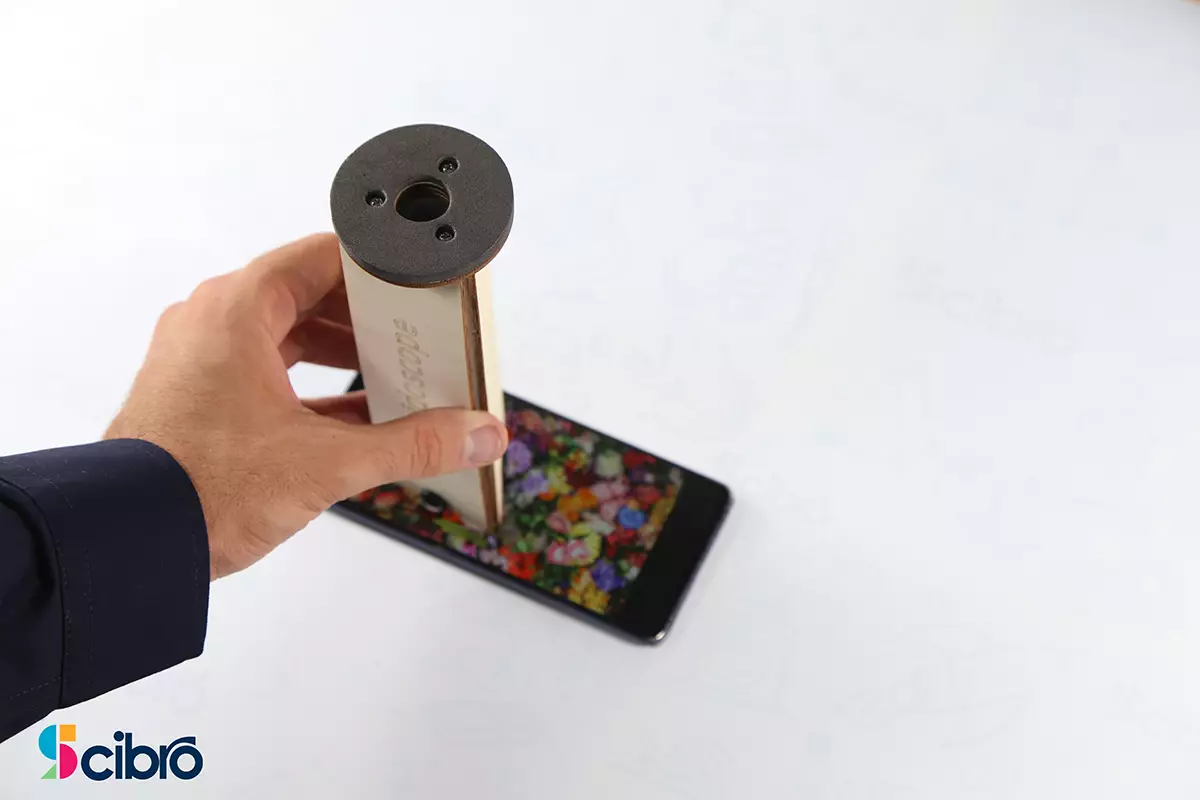
Kaleidoscope
In this kit, we will: • Build two different types of kaleidoscopes: one with three mirrors and one with six mirrors. • Use the kaleidoscopes to view various objects and images, creating stunning and mesmerizing visual effects. • Look at different items—like a friend’s eye—through the kaleidoscope and search for the most beautiful patterns. We will also learn: • What a flat mirror is and how it forms images. • How repeated reflection occurs with multiple mirrors. • What a kaleidoscope is and how it can be used to view beautiful symmetrical patterns. • Some practical applications of repeated images using multiple mirrors.
View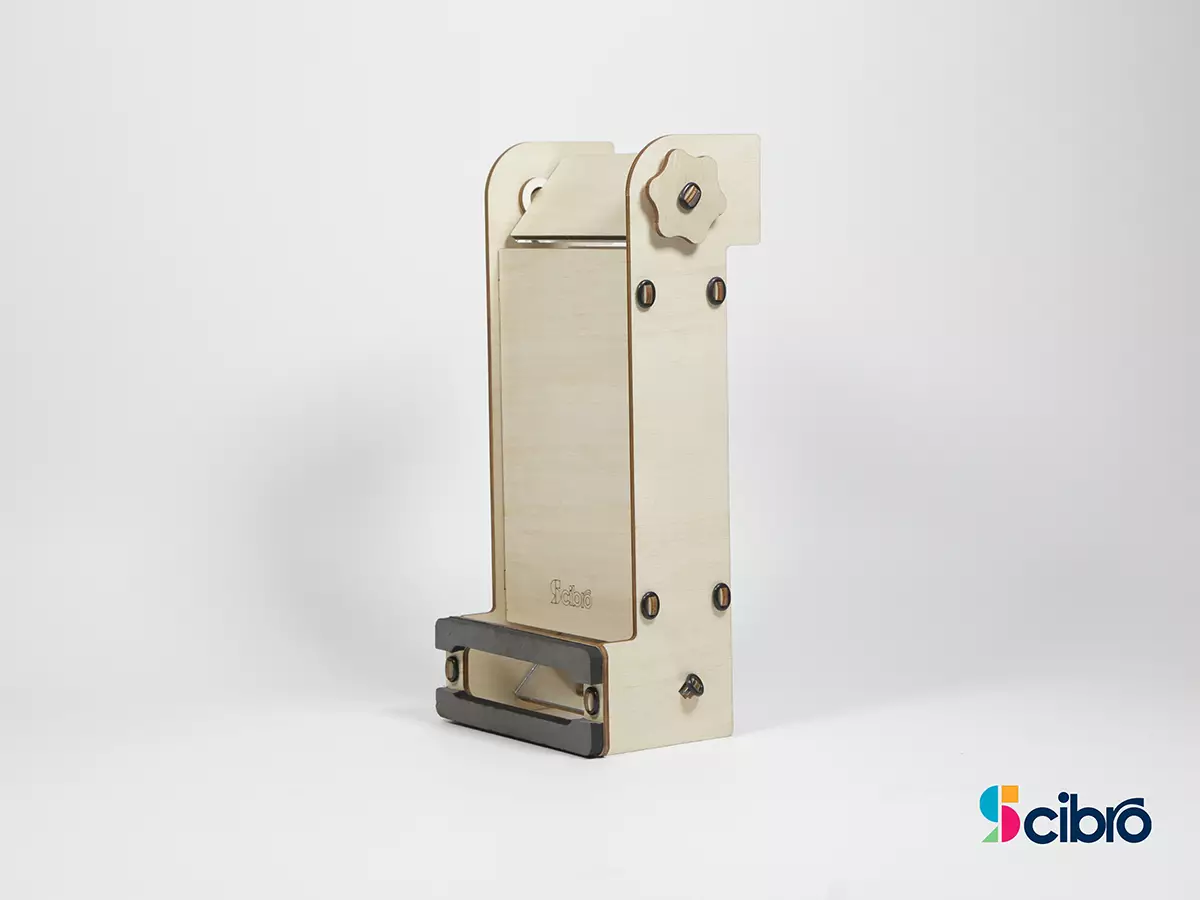
Periscope
In this kit, we will: •Build a special and beautiful periscope that allows us to look over or around an obstacle, such as a couch, while staying behind it. •Use a customized periscope to see what’s behind us! •Adjust the angle of the mirrors to see the ground in front of us while looking straight ahead! And we will also learn: •What is a periscope, and how is it structured? •What is geometric optics? •How is an image formed in a flat mirror? •What are the various applications of a periscope?
View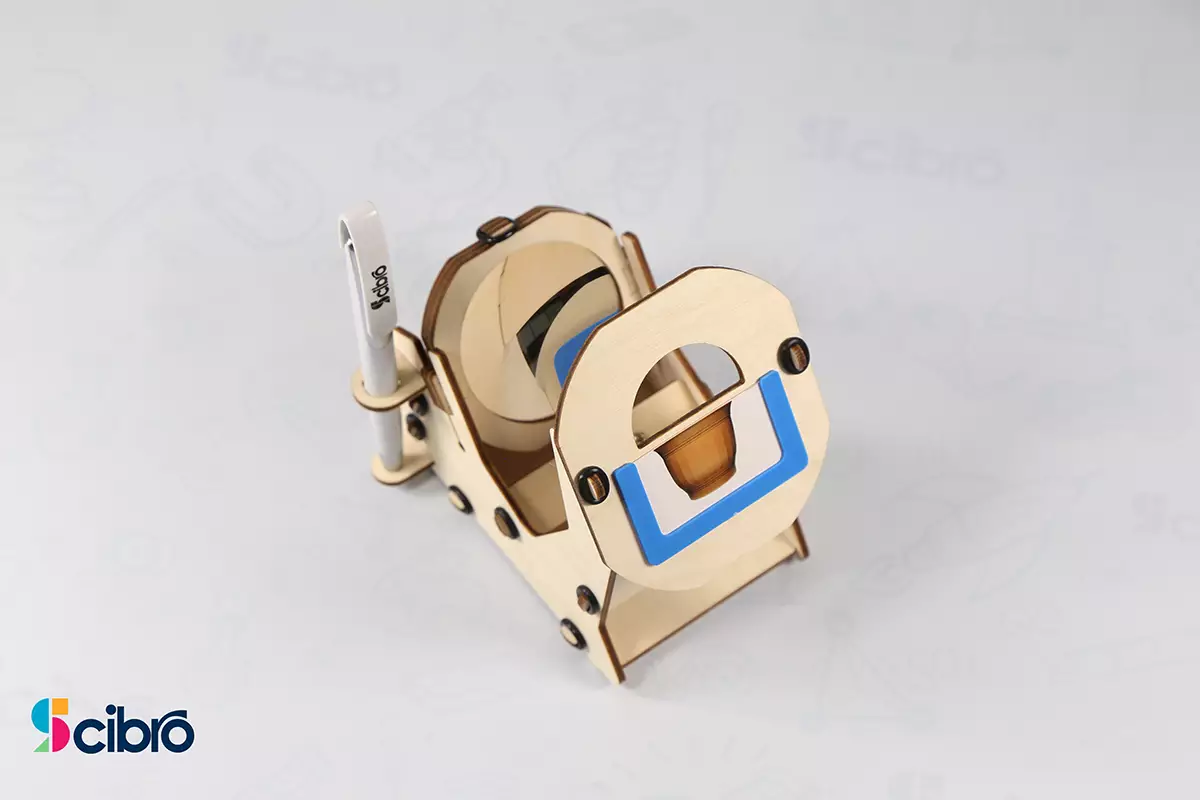
Magic Mirror
In this kit: •Examine our eyes and its details in a greatly magnified form. •Create a burning point by positioning a concave mirror under sunlight. •Finally, build a magic mirror that creates real, floating images of 2D and 3D objects in space that look real and touchable! We will also learn: •What is a concave mirror, and what are its characteristics and uses? •How can we form a real image in the air using a concave mirror? •What is the difference between real and virtual images?
View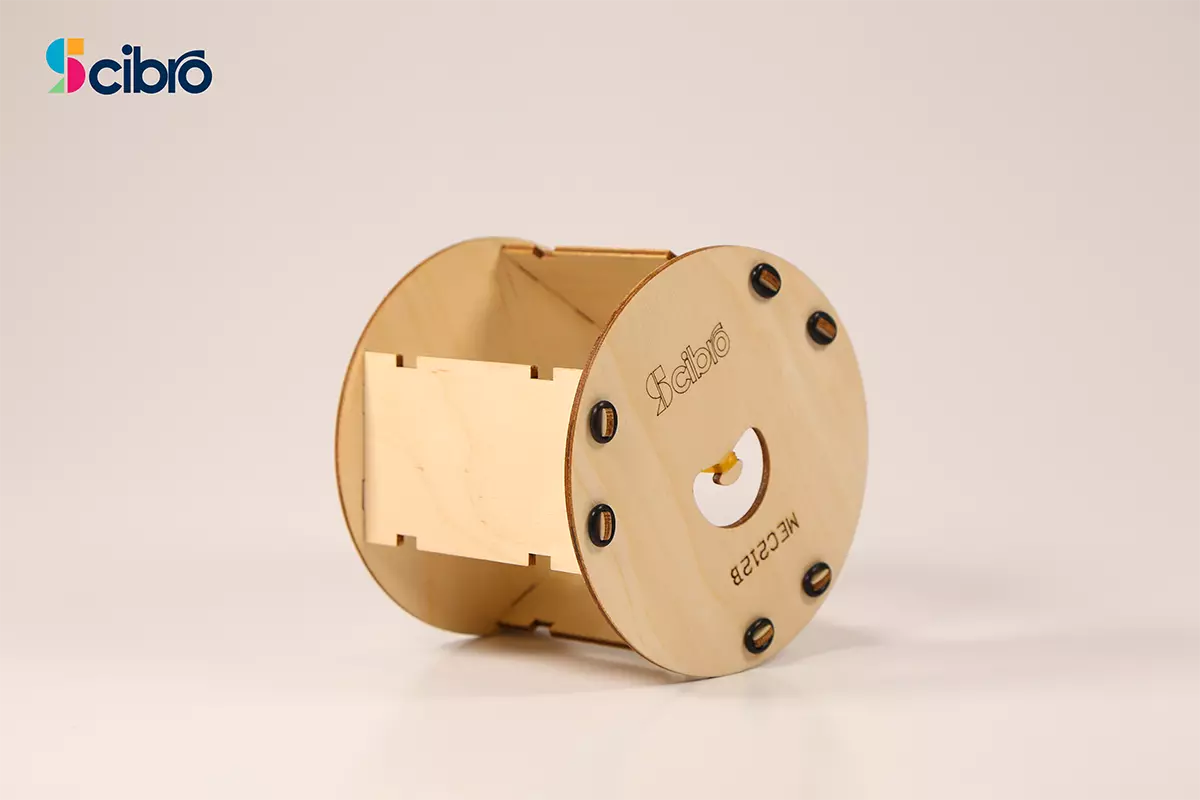
Magic Wheel
In this kit: • We build a magic wheel that works using a weight and a rubber band. • By spinning the wheel in one direction, the rubber band twists and stores energy inside it. • When the rubber band returns to its original shape, it releases the stored energy and makes the wheel move in the opposite direction. • With this fun activity, we not only entertain our friends, but also teach them more about physics You’ll also learn: • What is energy? • What are the different types of energy? • Introduction to elastic potential energy and one of its cool real-life applications. • How potential and kinetic energy transform into one another.
ViewKaleidoscope
In this kit, we will: • Build two different types of kaleidoscopes: one with three mirrors and one with six mirrors. • Use the kaleidoscopes to view various objects and images, creating stunning and mesmerizing visual effects. • Look at different items—like a friend’s eye—through the kaleidoscope and search for the most beautiful patterns. We will also learn: • What a flat mirror is and how it forms images. • How repeated reflection occurs with multiple mirrors. • What a kaleidoscope is and how it can be used to view beautiful symmetrical patterns. • Some practical applications of repeated images using multiple mirrors.
Periscope
In this kit, we will: •Build a special and beautiful periscope that allows us to look over or around an obstacle, such as a couch, while staying behind it. •Use a customized periscope to see what’s behind us! •Adjust the angle of the mirrors to see the ground in front of us while looking straight ahead! And we will also learn: •What is a periscope, and how is it structured? •What is geometric optics? •How is an image formed in a flat mirror? •What are the various applications of a periscope?
Magic Mirror
In this kit: •Examine our eyes and its details in a greatly magnified form. •Create a burning point by positioning a concave mirror under sunlight. •Finally, build a magic mirror that creates real, floating images of 2D and 3D objects in space that look real and touchable! We will also learn: •What is a concave mirror, and what are its characteristics and uses? •How can we form a real image in the air using a concave mirror? •What is the difference between real and virtual images?
Magic Wheel
In this kit: • We build a magic wheel that works using a weight and a rubber band. • By spinning the wheel in one direction, the rubber band twists and stores energy inside it. • When the rubber band returns to its original shape, it releases the stored energy and makes the wheel move in the opposite direction. • With this fun activity, we not only entertain our friends, but also teach them more about physics You’ll also learn: • What is energy? • What are the different types of energy? • Introduction to elastic potential energy and one of its cool real-life applications. • How potential and kinetic energy transform into one another.
Every Kit Sparks Wonder. Every Experiment Builds Confidence.
Join thousands of young scientists discovering the magic of hands-on learning
Start Your Science Journey Today